|
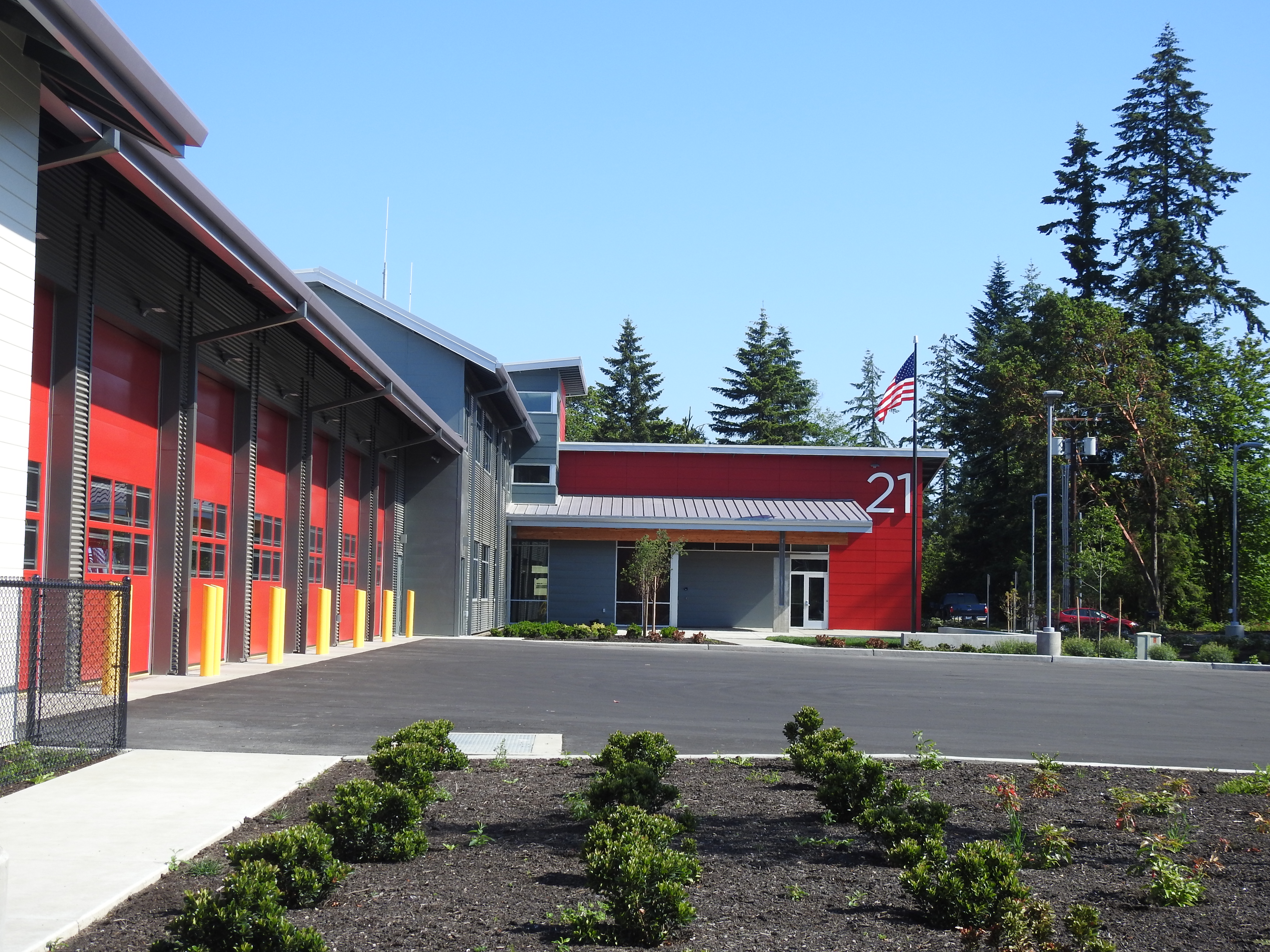
The Bainbridge Island Fire Department has been serving the Bainbridge Island community for over 60 years. An evolution of growth and change has taken the Department from 16 volunteer firefighters and one make-shift fire truck to what we are today: three fire stations, 21 response vehicles and over 80 members strong. As a primarily volunteer organization, the tradition of volunteerism and unity continues to fuel the Department today.
 In the summer of 1942, Louis W. Sinnett formed Kitsap County Fire Protection District Number 2. At that time, the Department had one truck and 16 volunteers who were called by telephone at home to respond to fires. In 1945, the telephone company began answering the phone and activated the sirens. By 1955 there was a fire station in Winslow, manned by volunteers, who dispatched all fire calls. In 1958 Chief Sinnett retired and was replaced by Chief "Squirrel" Callaham. The forward progress continued with dispatch radios being purchased for the trucks and for each volunteer to keep in his home. This enabled a more rapid response to fires since the Department was no longer dependant upon a telephone call to each volunteer. The 1960s were a decade of growth for the Department. In 1960, two Ford "Attack" Pumpers were purchased. In 1961 another Pumper and a Pumper/Tanker were purchased. The Pumper/Tanker was capable of fighting fire and carried twice as much water as the standard Pumpers. In 1969 two Ford Tankers were acquired, and the Department hired three full-time dispatchers. In 1970, a Seagraves Pumper was purchased, providing the Department with its first diesel powered truck that could pump 1750 gallons per minute -- over three times the flow of the Attack Pumpers. At this point, the Department had obtained 8 pieces of apparatus through donations and community support. In 1971 Don Beach became the Fire Chief. By 1972, airlifts began to speed up transports through the use of Army MAST helicopters. In 1976, the answering and dispatching of all emergency calls was taken over by the 911 center in Bremerton, "CenCom" as it is known today. By the mid-1970s, medical and first aid calls were quickly becoming a mainstay of the Department's operations. With these changes in response needs, the Rotary Club purchased a defibrillator for Department use. Chief Beach worked diligently with the Bainbridge Foundation and the Rotary club to purchase two fully-equipped Aid cars. These units, purchased in 1975 and 1976 through donations and Rotary Club support, provided the Department with the most up-to-date aid equipment available to respond to the growing number of medical calls. Bainbridge Island residents were also served by Seattle Paramedics who resided here on the Island. Chief Beach's brother, Ken C. Beach, and Don Wilsey volunteered their time to the Department as Paramedics and provided the first Advanced Life Support (ALS) services through a Fire Department in Kitsap County. The Department, under the direction of Chief Beach, began offering CPR classes to the public in 1974, and introduced Public Education classes in the local schools, services we still provide today. The Islands first shift "paid" Firefighters began work in 1978: Gary Clough, Mark Hannon and L. "Butch" Lundin, each of whom had been a volunteer or a dispatcher for the Department. The next 20 years marked rapid growth and expansion for the Department. In the mid 70s, the residents of Bainbridge Island approved the construction of a new station to be located at the corner of New Brooklyn and Madison Avenue. After almost three years of construction, the "headquarter station" opened in 1979. Although the building plans were designed to accommodate growth, projections could not have forecasted the rapidly increasing personnel and apparatus needs of the 80s and 90s.
In 1986, long-time resident, volunteer, Firefighter and Duty Captain Gary Clough became the new Fire Chief. Chief Clough worked intensely towards increasing the training of Department members. During his tenure as Fire Chief, paramedics from Seattle began providing rotating shift coverage to the Department, marking the beginning of an agreement that provided "paid" paramedic coverage for the Island, an agreement still in effect today. The Board of Commissioner's hired Neil Good as Executive Director for the Department in 1988 to relieve the Fire Chief of some administrative duties and allow him to focus on operations. This marked a change in organizational structure for the Department from the traditional "Fire Chief governed" structure. With the retirement of Chief Clough in 1991, Mark Hannon stepped up to the role of "acting" Fire Chief, serving in that capacity for two and a half years. With many changes taking place, Chief Hannon worked diligently to keep the members focused through the changes, while working to increase the volunteer pool through heavy recruiting and training. With a continuously increasing call volume, the Department was in need of funding to purchase more apparatus, build new stations and hire additional paid staff. In 1993, the voters approved a Levy increase that would allow the Department to meet some of these needs. In 1994, the Department officially became the "Bainbridge Island Fire Department" and was being managed by Chief of Operations Kirk Stickels. Chief Stickels worked towards increasing firefighter safety and accountability through use of the incident command system. As the commercial development of Bainbridge Island increased, Chief Stickels continued researching the viability of a ladder truck, a project two decades in the making, to provide aerial firefighting capabilities to commercial buildings. During his term, Chief Stickels aided the Department in purchasing two fire engines. The Board of Commissioners for the Bainbridge Island Fire Department hired Ken Guy as Executive Director in 1996. Together, he and Chief Stickels completed the hiring process of additional paid firefighters and gained community support in building a new fire station on Phelps Road. Upon the retirement of Chief Stickels in 2001, Volunteer Assistant Chief Ken W. Beach stepped in and acted as interim-Chief of Operations while the Department pursued a replacement. Later that year, Jim Walkowski was hired as Operations Chief. As a former cadet, resident, and long-time volunteer of the Department Chief Walkowski had come "home" to the community in which he was raised. Chief Walkowski assisted in the hiring of more firefighters and the process of hiring and training paramedics was begun. 2003 was a year of change and growth for the Department. A reorganization restored the leadership of the Department to the Fire Chief. Operations Chief Walkowski was promoted to Fire Chief and Luke Carpenter was hired as Operations Chief. Our first paramedic trainees graduated from the University of Washington Medic One Paramedic training program and began serving the community. After more then 60 years of growth and change, the Department is entering 2007 with new leadership and goals to accomplish our mission: to safeguard lives, property and the environment by responding to fires, medical emergencies and disasters. We recruit, train and equip our members to deliver programs aimed at emergency response, public education, prevention and recovery. |